Years ago I spent summers working at a camp in the Big Horn Mountains of Wyoming. Although the weeks were grueling, Saturday afternoon and Sunday were free time. Among my grandest memories are those of lying in the meadow at night observing the stars 8000 feet above sea level and sitting on the porch in bursts of pouring rain, lightning, and thunder.
Other memories include wandering through the forest and getting lost. Many times. Although we learned and taught others skills in orienteering, my propensity to use “the force,” meant that I spent more time in the woods than originally intended. I saw the trees and failed to access the bigger picture.
The same is often true in sorting relational challenges. It’s easy to get caught up in an immediate crisis or situation and fail to understand how it relates to the landscape of the relationship. If we are not aware, we will think we’re looking at a sheep, when, in fact, we’re face to face with a wolf in sheep’s clothing.
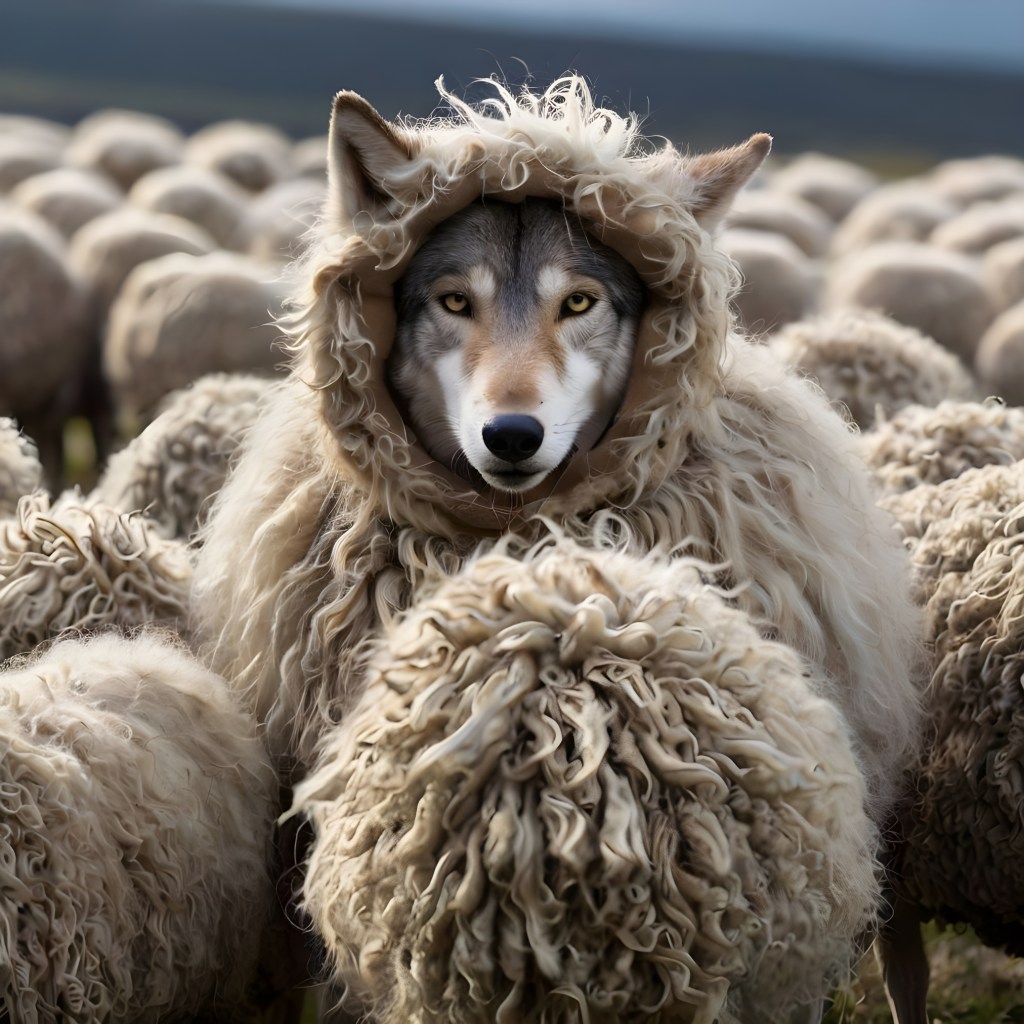
For those seeking to expand their understanding of an imbalanced, or oppressive relationship, I encourage you to look for the following*:
- Pervasive Denial of Responsibility.
Regardless of what is happening in the moment, is there an ongoing pattern of one individual lying, justifying, rationalizing, excusing and blame shifting?
If so, and if this is a person who has the role and resources that give him (or her) and advantage, the wolf-o-meter should go off. A person with a position and ability to provide for others, who fails to take personal responsibility, is likely using others to meet his own needs at desires. This is a normal response. This is a sinful response. This is not Christlikeness. If the individual claims a relationship with God in Christ, look for hard evidence. Ask the other individual in the relationship. Jesus said, “You will know them by their fruit.” Be honest. Be realistic. Be objective. This is not time to listen to and excuse their weakness, failure, and embrace falsehood. - Harsh Judgmentalism
Does one individual seem to deflect and distract with small offenses of others that have no bearing on the situation at hand? Do they pick at negligible words and actions of others while overlooking (or burying) the larger issues of justice, mercy, humility, kindness, and compassion?
If so, beware of being distracted and overwhelmed, especially if this is the individual who has a clear advantage in the relationship. It’s possible you find yourself doing this at times, but are you aware you do it? Are you actively asking God to help you? Some individuals aren’t. They don’t seem to care. Instead they throw shrapnel at those they should be protecting and providing for as a means of getting their own way and continuing in sin. The wolf-o-meter is rising. - Bold Deceitfulness
Do you hear yourself say, “He couldn’t possibly…” “He’s so gifted!” “…so good,” “He does so many kind things for others…” ?
If you are tempted to overlook or excuse sinful patterns of behavior because of an appearance of goodness, kindness, weakness, or giftedness, the wolf-o-meter has moved into the danger zone. An individual who has an “appearance” of righteousness without solid evidence is spoken of in Scripture. Jesus warned of wolves in sheep’s clothing (Matthew 7:15); Paul and Jude warned against predators from within the church and we are told that even Satan masquerades as an angel of light. Do not be deceived. These are individuals in positions of leadership in their home, church, and community. - Calculated Intimidation
Is someone afraid? Do you know how to identify fear? Fear changes our thoughts, words and behavior. We will do almost anything to avoid what we’re afraid of, especially if there is no hope of safety.
If the individual you are thinking of has the ability and record of inciting fear through threats (spoken and implied), shame, guilt, slander, etc., you are likely dealing with a wolf. As a shepherd, I assure you that sheep do not have the ability to defend themselves. Their teeth are designed to chew soft grasses and leaves. Their hooves are rounded. Their bodies are soft. They can not fight back. But their Shepherd can. And does.
The question is: how well do you know the Shepherd? Whose voice are you listening to? Would you know a wolf if you saw one? There’s one right in front of you. If you don’t see him, it’s time to ask why….
*Mending the Soul: Understanding and healing Abuse by Steven R. and Celestia G. Tracy pp. 64-75
 Seeking Sanctuary